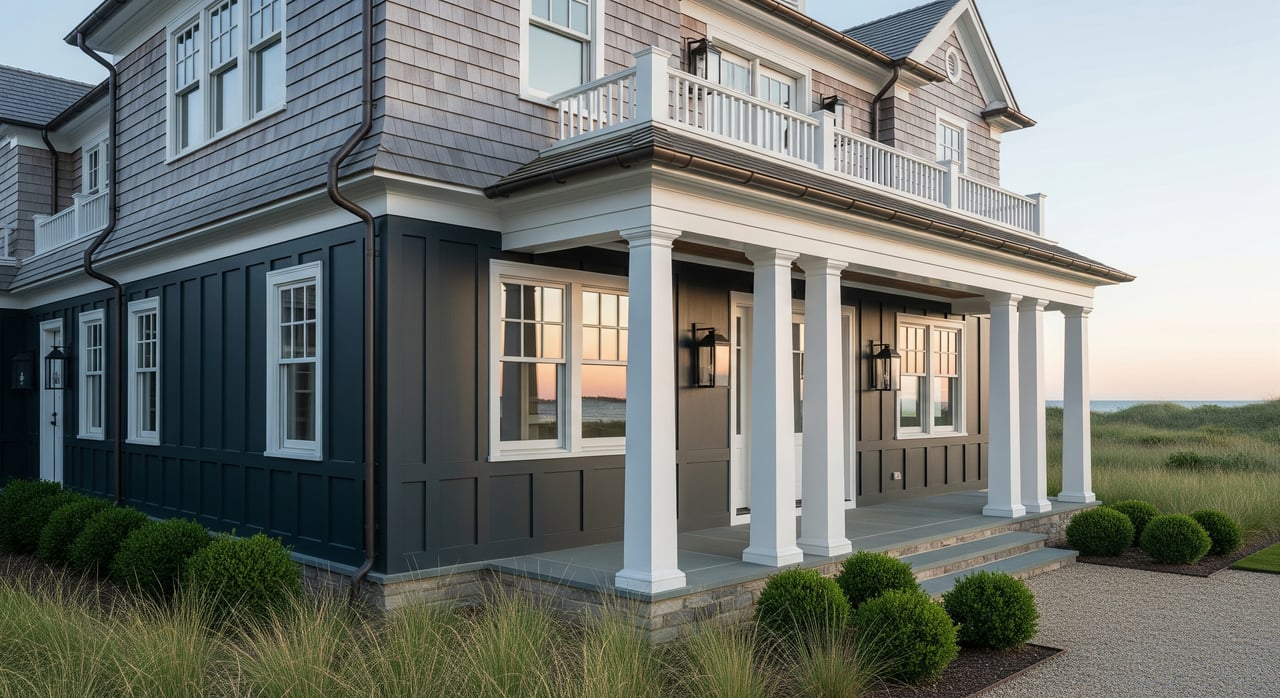
Choosing the right exterior palette in Wainscott can mean the difference between a smooth Architectural Review Board approval and months of redesign. You want a home that feels timeless and true to place, and you also want it approved without friction. In this guide, you’ll learn which materials, colors, and presentation strategies consistently earn yes votes in East Hampton, especially near Wainscott’s Agricultural Overlay. Let’s dive in.
What the ARB looks for in Wainscott
The ARB focuses on how your home reads from the street and across neighboring fields. Style is less important than visual compatibility and how your choices protect community character. If your site touches or is near agricultural land, expect closer attention to visibility, siting, and landscape.
Key priorities include:
- Scale and massing that fit the neighborhood pattern.
- Authentic, local materials and low‑chroma colors that weather naturally.
- Landscape moves that preserve open views and farmfield character.
- Controlled exterior lighting and well managed stormwater.
If you are near the Agricultural Overlay, anticipate questions about sightlines from public ways and fields, fencing types, driveway materials, and how much impervious surface you introduce. The board prefers solutions that read rural rather than suburban.
Palettes that pass: materials and colors
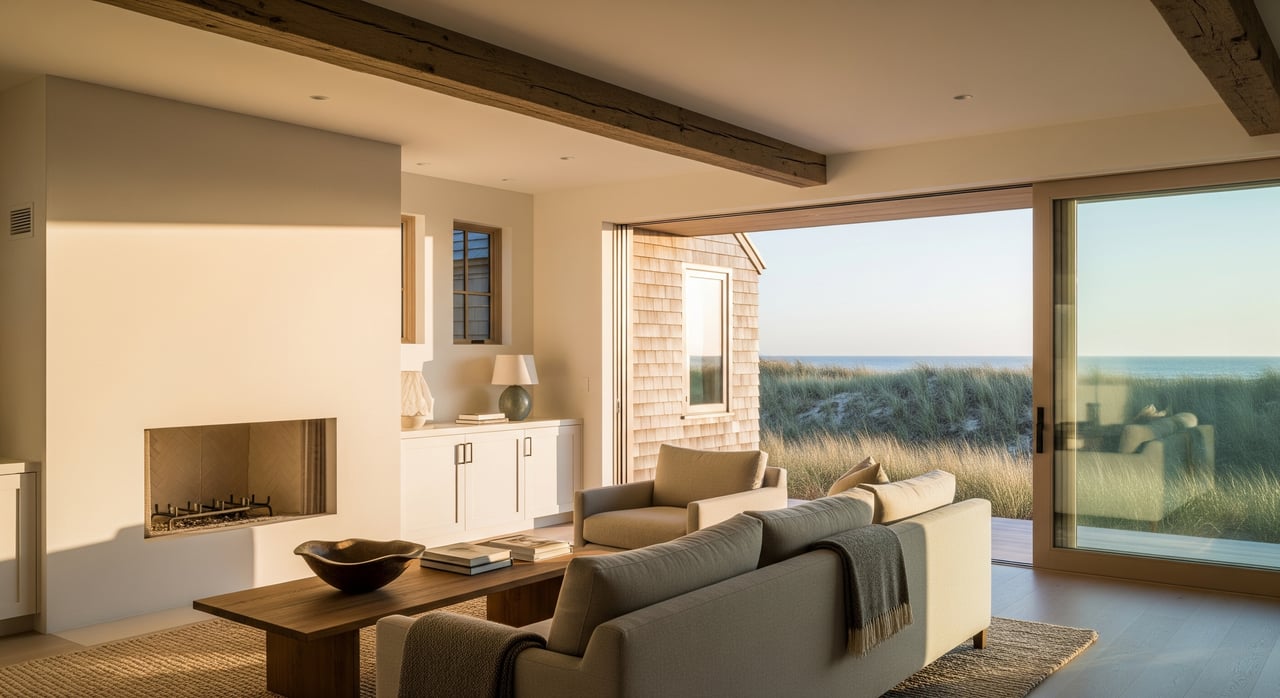
The safest approach is simple: low‑sheen, authentic textures that age in place. In Wainscott, this often looks like natural cedar, soft whites, muted greens, charcoal accents, and stone at the base.
Proven primary cladding
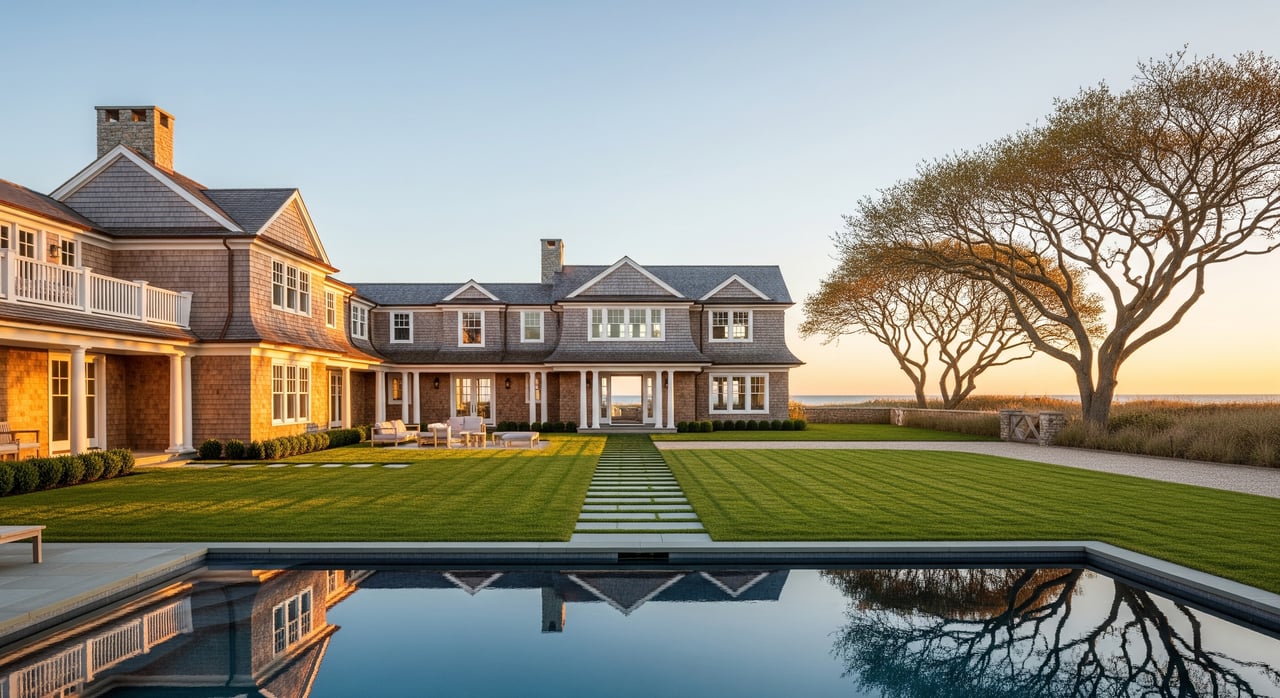
- Cedar shingles, natural or stained to weather to driftwood grey.
- Horizontal wood clapboard or narrow-profile siding with real wood trim or convincing wood-look alternatives.
- Natural or locally appropriate stone for foundations, piers, or short retaining walls.
- Board-and-batten or rough timber for agricultural outbuildings.
Acceptable with careful detailing
- Fiber-cement clapboard or shingles when you show full-size samples with realistic wood texture and matte finish. Disclose factory finishes and color stability.
- Standing seam metal roofing in muted, non-reflective tones like zinc grey or dark graphite. Best on barns, garages, or simple gabled volumes.
- Synthetic wood and PVC trim that looks convincingly like wood. Be ready with physical samples.
Use sparingly or avoid without strong context
- Bright, saturated colors on primary residences. These are typically rejected unless historically justified and limited in scope.
- High-gloss finishes, mirror glass, or reflective cladding.
- Large, uninterrupted expanses of stucco or smooth composites unless your immediate context supports it.
Color families that work in Wainscott
- Weathered cedar and driftwood grey as the main field color.
- Soft off-white, cream, or whitewashed tones for trim.
- Muted deep greens, dark charcoal, or blackened bronze for shutters, doors, and metalwork.
- Stone in warm greys, buff, and tan for base elements or low walls.
- For agricultural structures only, a barn palette of weathered red or muted rust can succeed if sited and scaled appropriately.
Tip: Favor matte or low-sheen finishes. Texture and shadow lines matter. Shingles, clapboard reveals, and real trim depth soften scale and help larger homes read as smaller volumes.
Massing and details that support your palette
Color cannot fix massing, but it can reinforce it. Break larger buildings into smaller, vernacular volumes and then use your palette to keep the composition quiet and cohesive.
- Roofs: Simple gables with modest overhangs read best. Primary roofs in shingle or slate-look materials, with muted standing seam metal on secondary volumes.
- Secondary forms: Add lower shed roofs, porches, and dormers that scale down the elevation and match the main roof pitch at a smaller size.
- Windows: Choose vertical proportions with consistent muntin patterns. Recess the units, keep trim substantial, and maintain rhythm across elevations.
- Entries and porches: Keep them human-scaled and modest, with natural stone at the base or a simple covered stoop to anchor the façade.
Use darker accent colors to visually recess secondary forms and lighter trim to articulate edges. This approach reduces perceived mass from the public way.
Landscape and site moves that make colors work
In Wainscott, landscape and sitework can make or break your palette. The goal is to maintain an agricultural edge, not a suburban one.
- Preserve existing field edges and view corridors. Where privacy is needed, choose low native hedgerows over tall, dense screens.
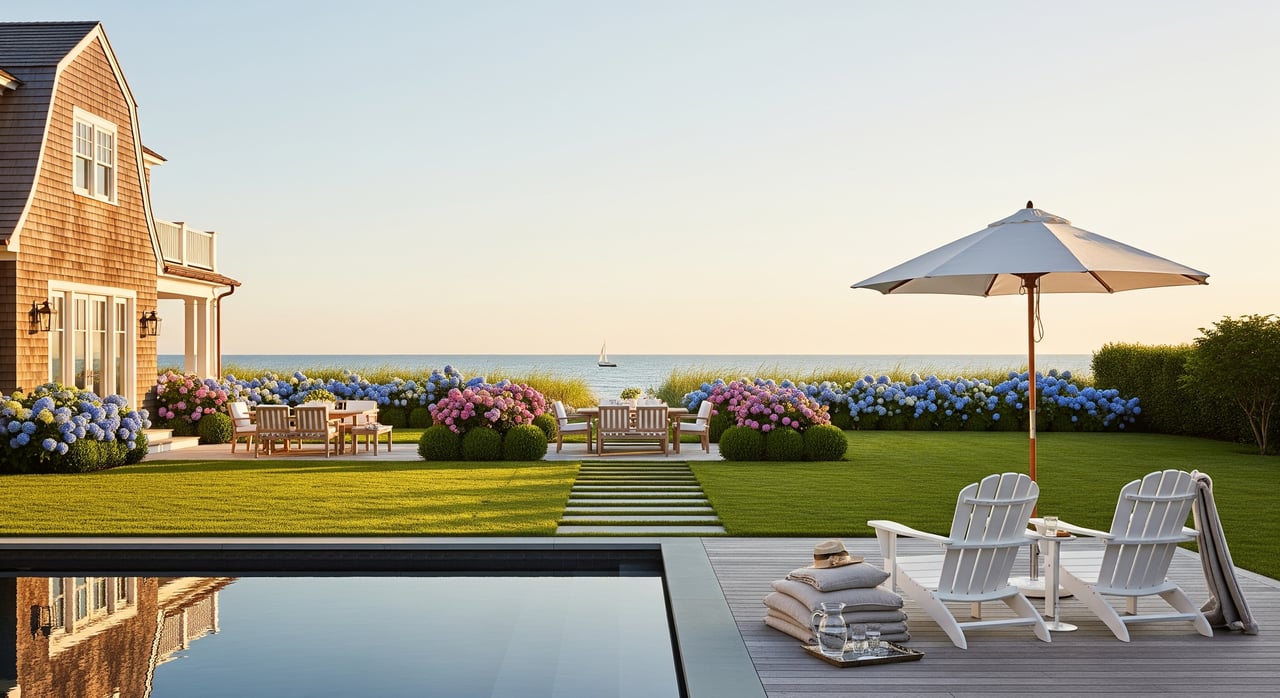
- Trade expansive front lawns for native meadows and low grasses that echo field character.
- Choose post-and-rail or split-rail fencing in natural wood tones. Avoid tall privacy fences, stockade, chain link, or high-visibility plastics.
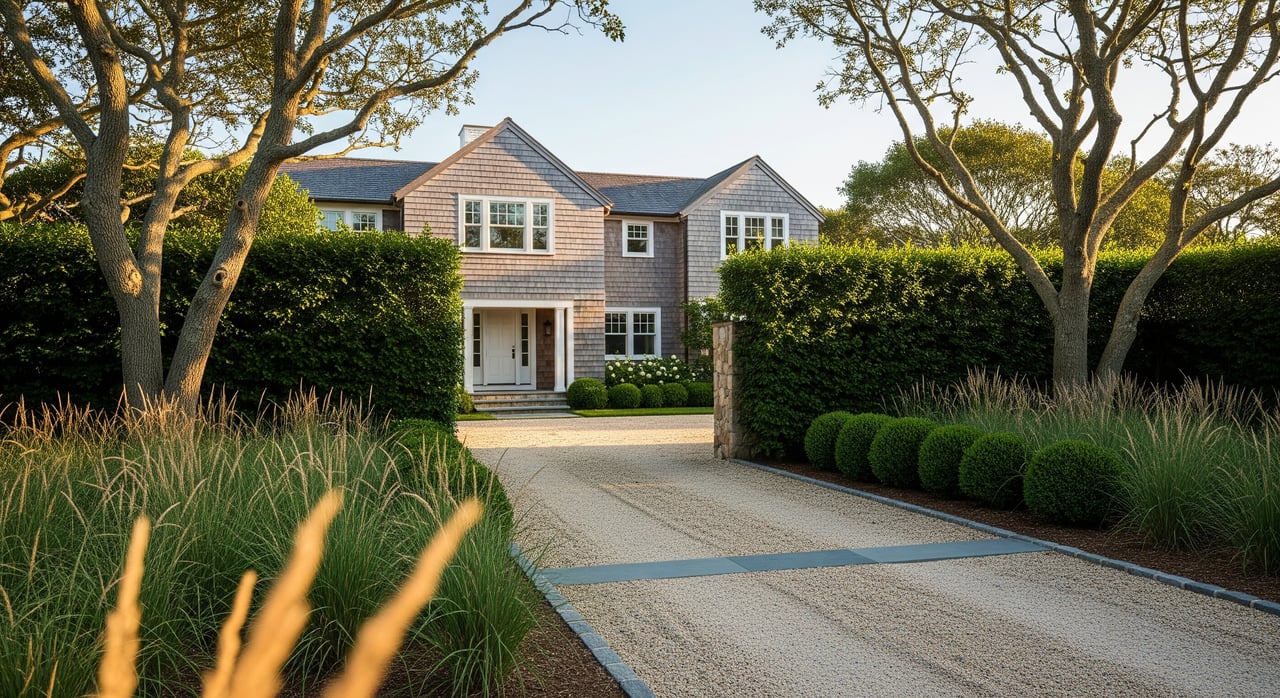
- Keep driveways as gravel or well graded aggregate with grassed edges or vegetated swales. Locate parking to the side or rear and reduce paved areas visible from the road.
- Prioritize native coastal and meadow species that tolerate sandy soils and deer pressure. Use specimen trees to frame views rather than block them.
- Manage stormwater on-site using pervious paving, rain gardens, and swales. Document cut and fill and preserve topsoil where you can.
- Present a thoughtful lighting plan with shielded, downlighting fixtures and lumen caps to protect the night sky and avoid spill onto fields.
Sample palettes for Wainscott settings
These combinations reflect approvals that often resonate locally. Use them as direction, then verify with real samples and context photos.
Driftwood Cottage
- Field: Natural cedar shingles allowed to weather to driftwood grey.
- Trim: Soft off-white, low-sheen.
- Accents: Dark charcoal shutters and a blackened bronze front door.
- Roof: Architectural shingle in muted slate grey.
- Site: Post-and-rail fence, native meadow at the road, gravel drive with grassed edges.
Farmhouse Quiet
- Field: Narrow wood clapboard with a light cream stain.
- Trim: Whitewashed tone with visible wood grain.
- Accents: Deep green on shutters and barn doors.
- Roof: Dark graphite standing seam on a small gabled garage volume, shingle on the main house.
- Site: Low stone base at porch piers, native shrubs to frame views, rain garden near the drive.
Barn Companion
- Primary Residence Field: Weathered cedar.
- Accessory Barn: Board-and-batten in muted rust with matte finish.
- Trim: Warm off-white to tie structures together.
- Roof: Non-reflective zinc grey metal on the barn, slate-look shingle on the house.
- Site: Meadow transition to fields, stone cheek walls at a simple gravel court.
Submittal strategy: how to present your palette
A strong palette is only as persuasive as your presentation. The ARB responds to clear visuals and real materials.
- Hold a pre-application meeting with planning staff to surface site-specific concerns.
- Document the neighborhood and your site with context photos from multiple public vantage points and adjacent properties.
- Provide a scaled site plan with topography, existing hedgerow and tree lines, driveway and parking, septic, wells, and sightline arrows.
- Submit full elevations with callouts for materials, trim profiles, roof pitch, and window patterns.
- Assemble a material board with full-size samples for siding, roofing, trim, stone, paving, and fencing. Show them in natural light.
- Include photomontages or 3D views from public ways. If your site is seasonal in visibility, show leaf-on and leaf-off.
- Add a landscape plan with a species list, sizes at planting, maintenance notes, and stormwater features.
- Provide a lighting plan with cut sheets and a simple photometric diagram that proves low glare and minimal spill.
- Write a concise narrative that ties your choices to local precedents and explains how you preserve agricultural character.
Common pitfalls and easy fixes
- Concern: Scale reads too large from the street. Fix with broken-up masses, lower secondary roofs, and planting that frames rather than hides.
- Concern: Materials feel inauthentic. Provide full samples, mockups, and proven local precedents using the same product.
- Concern: Visibility from fields or public ways. Offer alternative siting, partial berming, and native hedge or meadow buffers.
- Concern: Lighting or runoff impacts. Set lumen caps, use shielded fixtures, and show pervious paving and infiltration areas.
Your ARB checklist for Wainscott
Use this quick list to align design and submittal materials before you file.
- Request a pre-application meeting and visit the site with staff if possible.
- Create a full context photo set with approaches, public ways, and adjacent fields.
- Prepare a scaled site plan with topography, landscape edges, and sightlines.
- Draft elevations and wall sections with explicit material and trim callouts.
- Assemble full-size samples for siding, roof, trim, stone, paving, and fencing.
- Produce photomontages or 3D views from public vantage points, in leaf-on and leaf-off conditions where relevant.
- Complete a landscape and lighting plan with species lists and cut sheets.
- Document stormwater solutions such as swales, rain gardens, and pervious areas.
- Write a short narrative connecting your palette and massing to local precedents.
- Conduct neighbor outreach if appropriate and note responses.
Final takeaways
If you keep your palette natural, matte, and textured, scale the massing down with simple gables and porches, and present a complete package with real samples and context views, you give the ARB a clear path to yes. The result is a home that feels rooted in Wainscott’s agricultural edge, looks better over time, and moves more smoothly through review.
If you want help evaluating a site, aligning your palette to local precedent, or coordinating an approval strategy with your build timeline, our team is here to advise from acquisition through finishing touches. Request a Private Hamptons Consultation with Unknown Company.
FAQs
What materials and colors usually pass in Wainscott?
- Low-chroma, natural materials like cedar shingles, wood clapboard, stone accents, soft off-whites for trim, and muted greens or charcoal for accents typically perform well.
Are fiber-cement siding or composite trims allowed by the ARB?
- Yes, they can be acceptable if you provide full-size samples that show woodlike texture and matte finish, and if details like corner boards read convincingly authentic.
Will the ARB approve a standing seam metal roof?
- Often, when the color is muted and non-reflective. It is most successful on secondary or agricultural volumes, while primary roofs often use shingle or slate-look materials.
How important is the way materials weather over time?
- Very important. The board favors materials and finishes that age to muted, natural tones rather than bright, new, or glossy appearances.
Can I paint an accessory barn a traditional red?
- Possibly, if the color is muted, the structure is appropriately sited, and visibility is limited. Acceptance depends on context and whether the color preserves rural character.
What mistakes most often trigger pushback in ARB review?
- Overscaled massing, reflective materials, suburban fencing and hardscape in open fields, thin documentation of visibility, and inadequate stormwater or lighting controls often lead to delays or rejections.